


Why the real challenge for professional bodies is organisational before it is technological
In brief:
Many professional bodies invest in digitalisation without getting the results they expected. In most cases the problem is not a lack of tools, but fragmented information and processes. This article looks at the role of interoperability and data governance, and at the direction set by Italian and European digital policy, from the Italian Digital Administration Code (CAD), AgID and the National Cybersecurity Agency (ACN) to the EU Interoperable Europe Act.
Estimated reading time: 8 minutes
Over the past few years I have talked with presidents, board members, secretaries, treasurers, digital transition officers, DPOs and administrative staff from very different professional bodies.
Some manage a few hundred members; others run professional communities of thousands of people with complex organisational structures. Yet, despite differences in size, organisation and location, I have often noticed one thing in common.
When it comes to digitalisation, attention almost always goes to the tools.
The discussion is about which management system to adopt, which platform fits best, which supplier is most reliable, or which technology promises to solve existing problems.
That is perfectly understandable: technology is the most visible part of change. But it is rarely the main cause of the difficulties these organisations face every day. Training staff and learning new software is never trivial, not to mention checking whether the support you were promised actually exists or is just another line in a signed contract.
After almost twenty years in this sector, I have come to a conviction that has only grown stronger over time:
the problem is rarely the software.
Far more often, the problem is data fragmentation.
And that is exactly where it is worth starting.
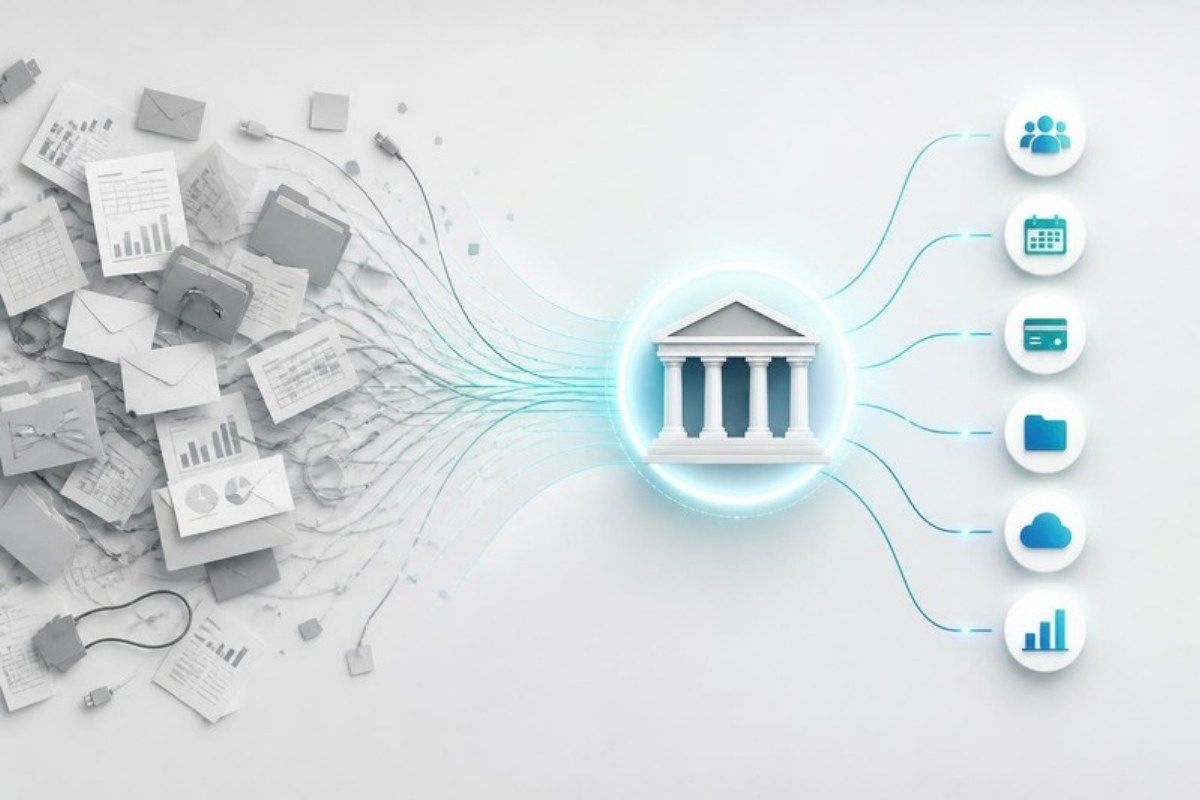
When information is everywhere and nowhere at the same time
Every day, dozens if not hundreds of pieces of information pass through a registrar’s office.
A request arrives by certified email, a message comes in through the website form, a member hands in a document at the office, a professional phones to ask about the status of an application. Meanwhile there are official communications, payments to check, registration requests, documents to log, updates to record and data to share with consultants or external bodies, all seasoned with phone calls, the doorbell ringing and a parcel to collect from a courier.
On its own, none of these activities is a problem.
The problem arises when each piece of information follows a different path and is handled in systems that do not talk to each other.
In these situations the same data is often checked several times, entered into different platforms or moved manually from one system to another.
Not because of a lack of skills, nor because staff are inefficient, but “simply” because the organisation has grown by layering different tools without real integration between processes.
It is far more common than you might think.
And because it happens every day, it tends to be seen as normal.
Digitalising a tool is not the same as digitalising a process
In recent years many professional bodies have invested heavily in digital transformation.
They have introduced portals, member services, document management systems, online payments, communication platforms and dedicated apps.
This is certainly a significant step forward. But one of the most common mistakes is confusing the presence of digital tools with truly digital processes.
The two are not necessarily the same.
A process becomes digital when information flows without interruption through every stage, without redundant tasks, without constant manual re-entry and without having to keep checking which system holds the correct data.
When that does not happen, the technology is there but the organisational benefit remains incomplete.
Many of the inefficiencies organisations experience today are not caused by missing tools, but by the difficulty of making them work together.
A concrete example is the registration of a new member.
The process includes an online part, an in-person step at the office, drafting the board resolution in a word processor, sending certified emails to institutions, notifying the member and, finally, logging everything in the official register. Every step is necessary, but they often take place in different systems and programs, with the same data re-read, copied and re-checked at each step.
When the entire process is managed on a single platform, from reviewing the application to registering the resolution, the change is immediate. In our experience, the reduction in repetitive work is felt within the first few weeks. Members can start their application from home, without visiting the office, and the whole process can also be managed from a mobile app.
Who really governs your organisation’s information assets?
Over the years I have seen situations that deserve deeper reflection.
Presidents struggling to retrieve documents produced by their own organisation. Registrar offices forced to check the same information in different systems. Consultants working on partial data extracts.
Staff who, while operationally responsible for the information (the data controller is always the professional body), found it hard to reconstruct the full history of a file or procedure.
Situations like these inevitably raise a question that, in my view, is one of the most important aspects of digital transformation:
who really controls the data?
Because data should not belong to the platform.
It should not belong to the software.
And it should not belong to the supplier.
Data should always belong to the professional body.
Being able to access, analyse, export and use it effectively is one of the most strategic assets for any organisation. That is why our software lets you export your data as a usable database dump that the organisation can work with independently, even outside our platform.
When that ability is lost, the problem is no longer technological: it becomes organisational, managerial and, in some cases, even a matter of decision-making.
Interoperability is not a feature. It is an organisational principle
In recent years the word interoperability has become increasingly common in the language of public administration.
However, it is often (and I would add, at best) understood as a simple technical integration between different applications.
In reality the concept is much broader.
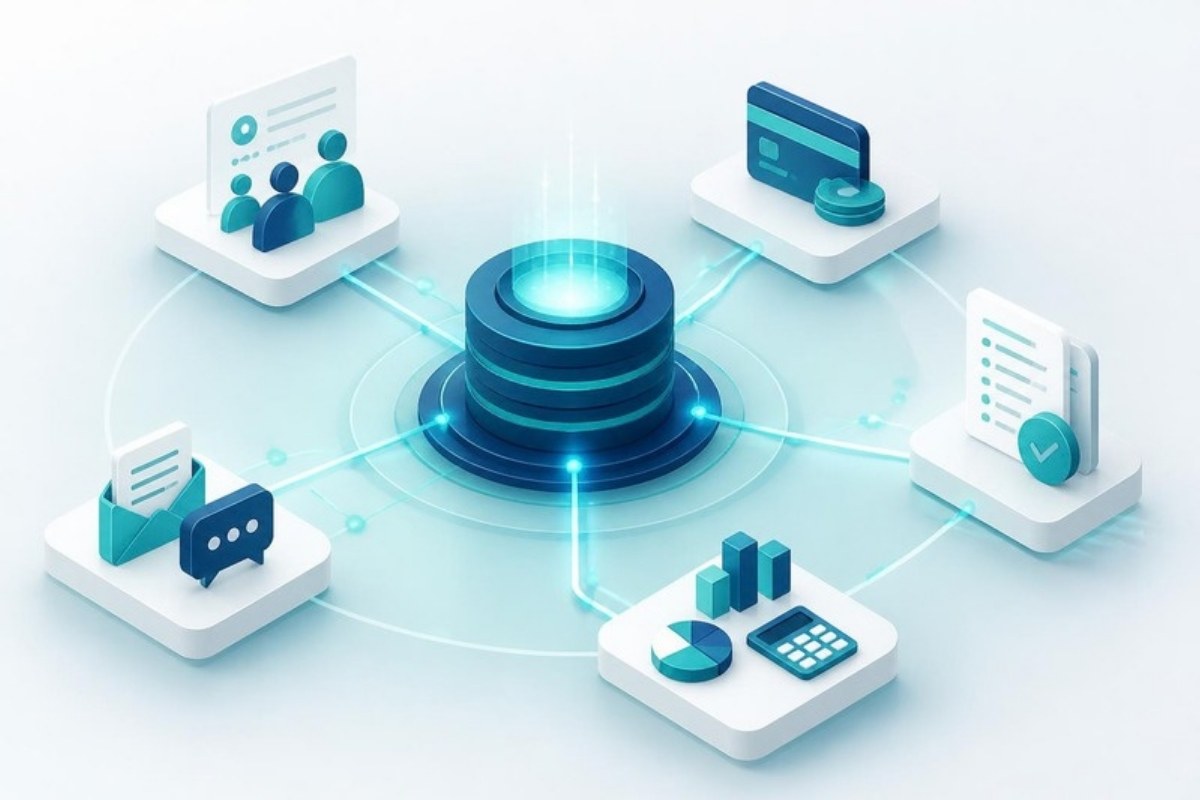
Interoperability means enabling different systems, people and processes to work together using information that is consistent, up to date and available when it is needed.
It is not an optional technology choice.
Legislators have progressively strengthened a principle that will have a growing impact on professional bodies too: data must not stay locked inside individual systems or applications, but must be shared, exchanged and put to good use across the whole institutional ecosystem in which the organisation operates.
In Italy, the Digital Administration Code (CAD), the AgID guidelines and the national data interoperability strategies promote information sharing between administrations, including through the once-only principle. The Cloud First principle, the Italian Cloud Strategy and the framework set by the National Cybersecurity Agency (ACN), which qualifies the cloud services public administrations may use, set out how to host and protect that data securely. At European level, the Interoperable Europe Act and the once-only principle point in the same direction. Together they outline a common goal: ensuring that information can move between organisations, platforms and administrative levels in a secure, controlled, traceable and consistent way.
The goal is not to centralise data in a single place or to create new forms of technological lock-in. On the contrary, it is to let information flow freely between everyone involved in the administrative process, while preserving its integrity, quality and availability.
For a professional body, this means allowing data, documents and procedures to flow correctly between members, the registrar’s office, the board, consultants, auditors, national federations and, where necessary, other public administrations, avoiding duplication, manual re-entry and constant reconciliation.
Real digital transformation is therefore not about piling up new tools, but about building an ecosystem in which every piece of information is entered once and made available, in line with roles and regulations, to everyone who legitimately needs it. This ability to share and make the most of data is now one of the main indicators of an organisation’s digital maturity.
Seen from this perspective, interoperability stops being a technical feature and becomes a genuine organisational model.
Regulation is already setting the direction
There is another aspect that is often underestimated.
Many of the topics discussed today (interoperability, accessibility, security, data governance, cloud, accountability) do not come from the technology market.
They come from the evolution of the regulatory and strategic framework that applies to the whole public sector.
Add to these the GDPR, with its accountability principle, and accessibility obligations. They all converge on one clear goal:
building organisations capable of governing data effectively, securely and interoperably.
So the real question is not whether this transformation will affect professional bodies.
The question is when and how each organisation will decide to tackle it.
The professional body of the future is not a piece of software
When we talk about innovation, we naturally think of new platforms, new apps or new tools. In reality, the professional body of the future is not a specific technology.
It is first and foremost an organisational model.
It is the ability to eliminate tasks that add no value.
To reduce duplication.
To improve the availability of information.
To give people back the time they need to focus on what truly creates value for the organisation and its members.
The bodies working in this direction are achieving tangible results:
greater operational efficiency, fewer errors, better-quality information, more controllable processes and a better experience for the professionals who deal with the organisation every day.
Not because they bought new software.
But because they started rethinking how information is created, shared and used.
A final thought
If tomorrow you had to describe the full path of a specific process in your organisation, could you say exactly how many systems are involved?
How many people take part?
How many times the same data is entered?
How many manual steps are still needed?
The answers to these questions say far more than any brochure or sales presentation: they reveal the organisation’s real level of digital maturity, and they are probably the right starting point for any innovation journey.
Because the real challenge of the coming years will not be buying new tools, but overcoming the fragmentation that today slows processes down, increases costs, multiplies manual work and limits the value of information.
Interoperability is not a trend.
Interoperability is the prerequisite for digital transformation to deliver concrete, lasting results.
How we work at SWD Group
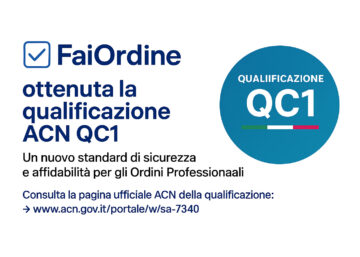
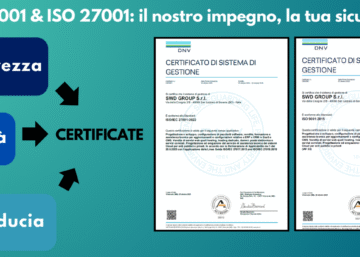
At SWD Group we develop FaiOrdine, the management platform for professional bodies, whose FAI Ordine service is qualified by ACN at level QC1, and AiBill, accounting and financial reporting software for professional bodies. We are ISO 9001 and ISO/IEC 27001 certified. We always start from the organisation’s processes and information flows, not from the software, and the data stays with the professional body. To learn how to eliminate repetitive manual tasks in your workflows, read also how to streamline workflows with an ERP.
Want to know your organisation’s level of digital maturity?
Together we will review processes, tools, information flows, interoperability and possible areas for improvement, starting from your organisation’s real situation.
Leonardo Pantaleo
CEO, SWD Group S.r.l.